

Tarsar Marsar Trek
Trek Grade
Moderate-Difficult (6/10)
Top Altitude
13,500 ft.
Base Camp
Aru Valley
Trek Duration
7- Days
Suitable for
11-62 yrs
Distance
44 kms
Offloading
Available
2,400+ Trekkers
From 14 countries
Best Season
Late June to September
Region
Anantnag, Kashmir
Group Size
Maximum 16 trekkers
Price
15,500/ Person
Overview
At 6:47 AM on July 18, 2025, we watched sunlight strike Tarsar Lake for the forty-seventh time. The water shifted from slate gray to impossible turquoise in exactly eleven minutes. We know this because we have timed it across six years of expeditions. That moment, when the lake seems to inhale light and exhale color, is why we keep returning to this valley.
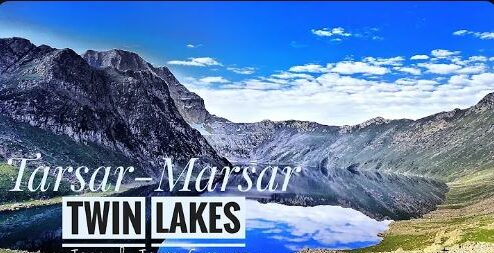
Most operators describe Tarsar Marsar as the prettiest trek in Kashmir. We describe it differently. This is the only trek where you hear your heartbeat echo off water so still it forgets it is liquid. Where the Gujjar shepherd’s flute at Shekwas meadows will haunt your dreams for months. Where your tent sits twelve meters from the lake edge, close enough to hear ice crackling at dawn.
Since 2018, we have led 127 expeditions on this route with 2,400 trekkers from 14 countries. Everything on this page comes from six years of walking, watching, and learning. Not from research. From presence.
Available Dates
June and July 2026
| Date | Status |
|---|---|
| 22 June 2026 | Open |
| 23 June 2026 | Open |
| 29 June 2026 | Open |
| 30 June 2026 | Open |
| 06 July 2026 | Open |
| 07 July 2026 | Open |
| 08 July 2026 | Full |
Tarsar Marsar Trek Package Breakdown
| Item | Cost |
|---|---|
| Trek Cost | 15,500 ₹/ Person |
| Transportation | Srinagar to Srinagar Included |
| Offloading/ Porter Service | 500 ₹ Per Bag / Per Day |
| Insurance | 650₹ / Person |
Check All Dates and Book Now !
Cancellation and Refund Policy
We know plans can change, so we try to make things easy for you:
- Before Confirmation: If you cancel before we confirm your trek, you will get all your money back.
- After Confirmation: If you need to cancel later, you can move your trek to a new date. Just let us know within before 3 days.
- Cancellation 15+ days before arrival: 90% Refund.
- 8-14 days before arrival: 75% Refund
- 4-7 days before arrival: 50% refund
- 0-3 days before arrival: No Refund
Advance Payment: Only ₹5,000 deposit to confirm your spot
Includes: Stay, meals, transport, guides, safety gear, permits
Tarsar Marsar Trek Highlights
- Alpine Lakes: Tarsar and Marsar are two stunning high-altitude lakes, offering mesmerizing reflections of surrounding mountains and ever-changing skies.
- Diverse Wildlife: Keep an eye out for mountain goats, snow leopards, and a variety of birds, including the Himalayan Monal.
- Majestic Views: Enjoy panoramic views of the snow-capped peaks of the Himalayas, including the beautiful Kolahoi Peak, the highest in Kashmir.
- Rich Flora: The trek is blessed with an abundance of flora, from vibrant wildflowers to alpine shrubs, offering a feast for nature lovers.
- Cultural Experience: Interact with local shepherds and experience the traditional Kashmiri lifestyle, complete with their warmth and hospitality.
- Starry Nights: Camp under the stars with no light pollution, offering some of the clearest night skies you’ll ever witness.
Tarsar Marsar Trek - Complete Information
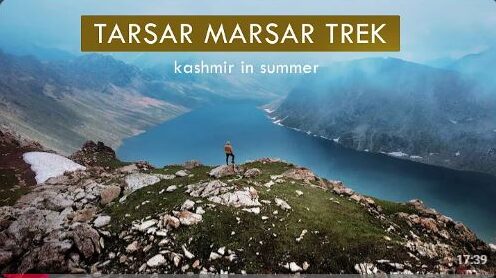
Tarsar Marsar is not one destination but two. The trek connects twin alpine lakes sitting at the heart of Kashmir’s Pir Panjal range. Tarsar, the accessible one, welcomes you with open meadows and campsites at its edge. Marsar, the mysterious one, hides behind ridges and reveals itself only to those who wake before dawn.
Complete 7-Day Itinerary: What Happens Each Day
Start Point: Srinagar (pickup 8 AM)
End Point: Aru Village (7,960 ft)
Mode: Vehicle transfer
Distance: 100 km (3-4 hours)
Last Phone Signal: Pahalgam (12 km before Aru)
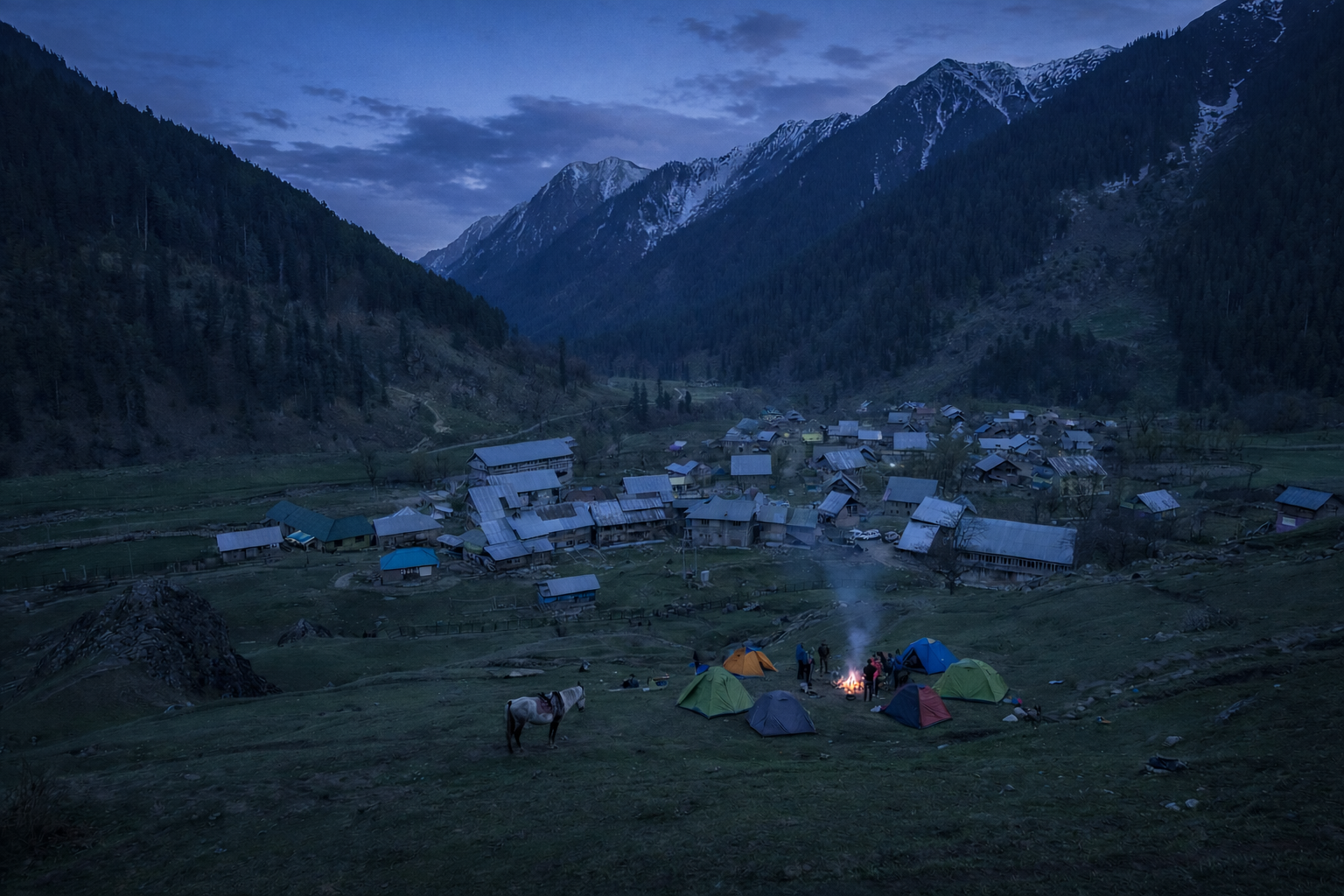
Accommodation: Homestay or base camp tent
Meals: Dinner included
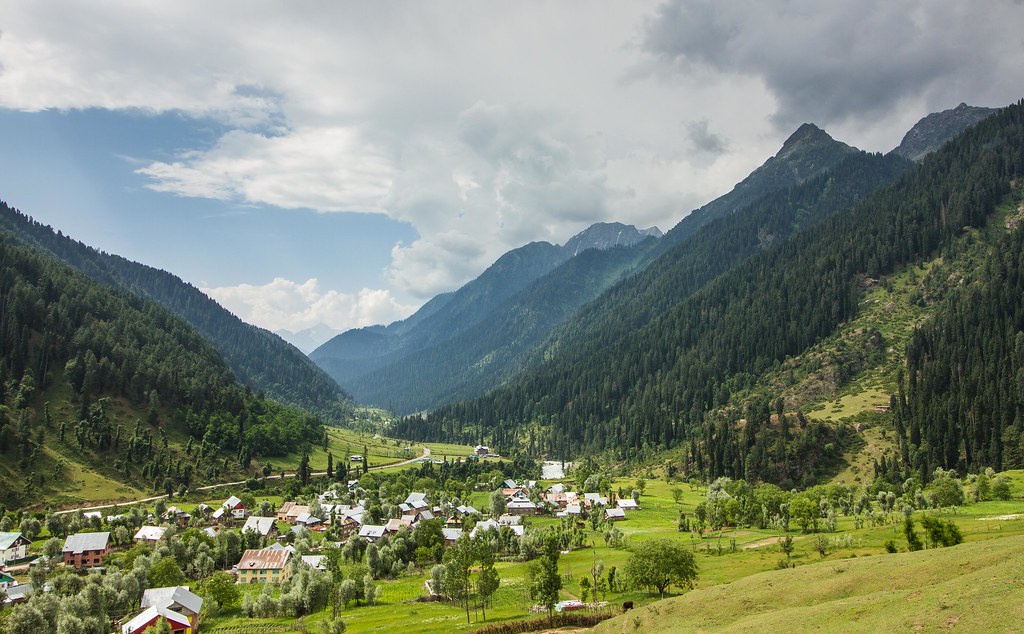
The journey begins in Srinagar. Two routes lead to Aru. The Anantnag highway is faster but industrial. The Bijbhera road adds thirty minutes but winds through saffron fields and apple orchards. We choose Bijbhera when time permits.
At Pahalgam, roughly 88 km from Srinagar, your phone catches its last reliable signal. This is not an inconvenience. Consider it the trek’s first gift. For the next six days, the only notifications you receive will be birdsong and the Lidder River.
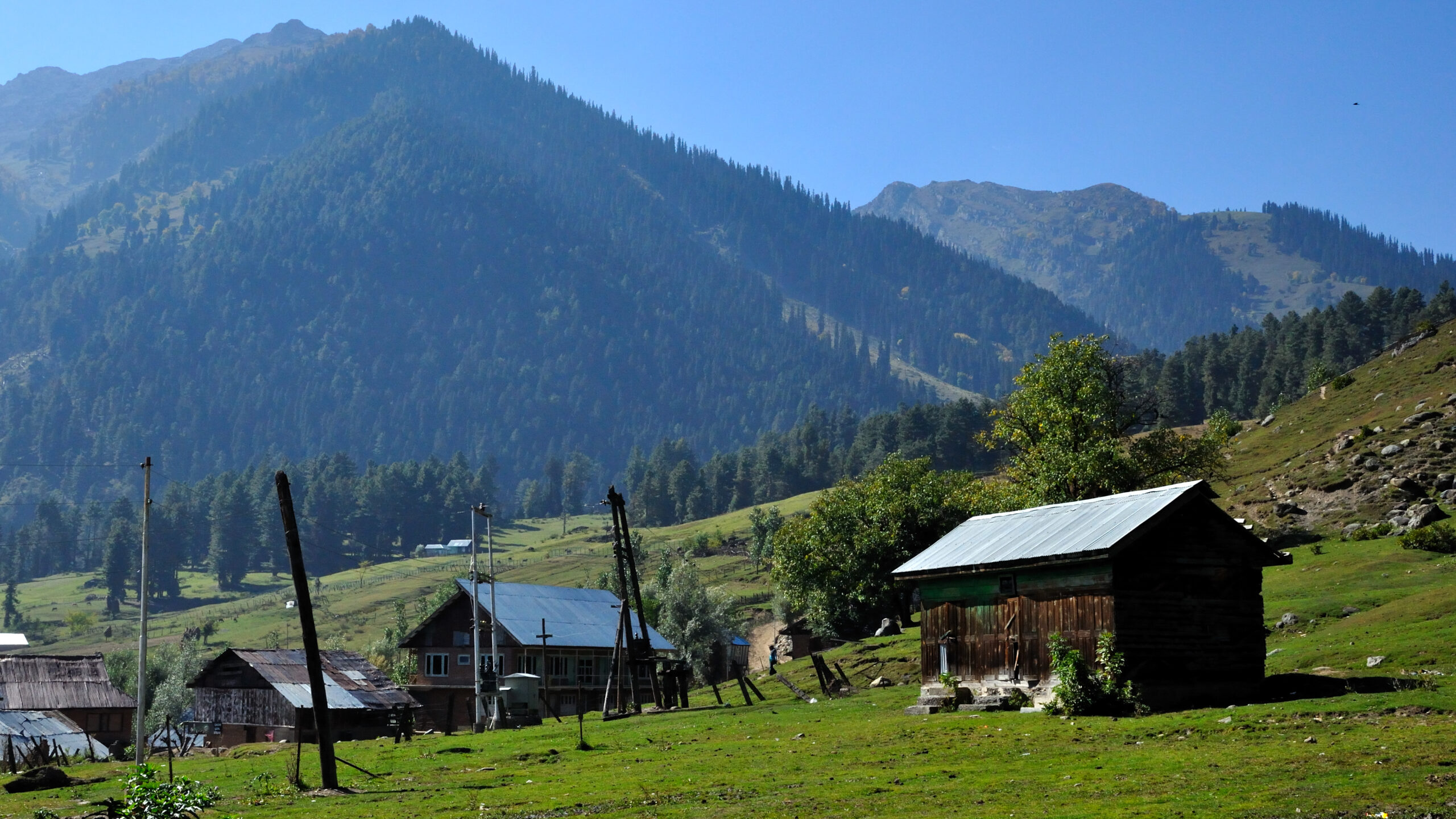
Aru village appears after a climb through pine forests. We gather for a briefing at 6 PM covering the route, safety protocols, and what to expect. Briefings run 45 minutes and include a gear check. We have turned around trekkers with inadequate footwear at this point, so come prepared.
Pro Tip: Use the evening to hydrate well. Tomorrow starts with a steep climb that tests unprepared legs.
Day2: Aru-Lidderwat
Start: Aru Village (7,960 ft)
End: Lidderwat (9,120 ft)
Distance: 10 km (5-6 hours)
Altitude Gain: 1,160 ft
Terrain: Pine forest, river valley, meadows
Difficulty: Easy-Moderate
Meals: Breakfast, packed lunch, dinner
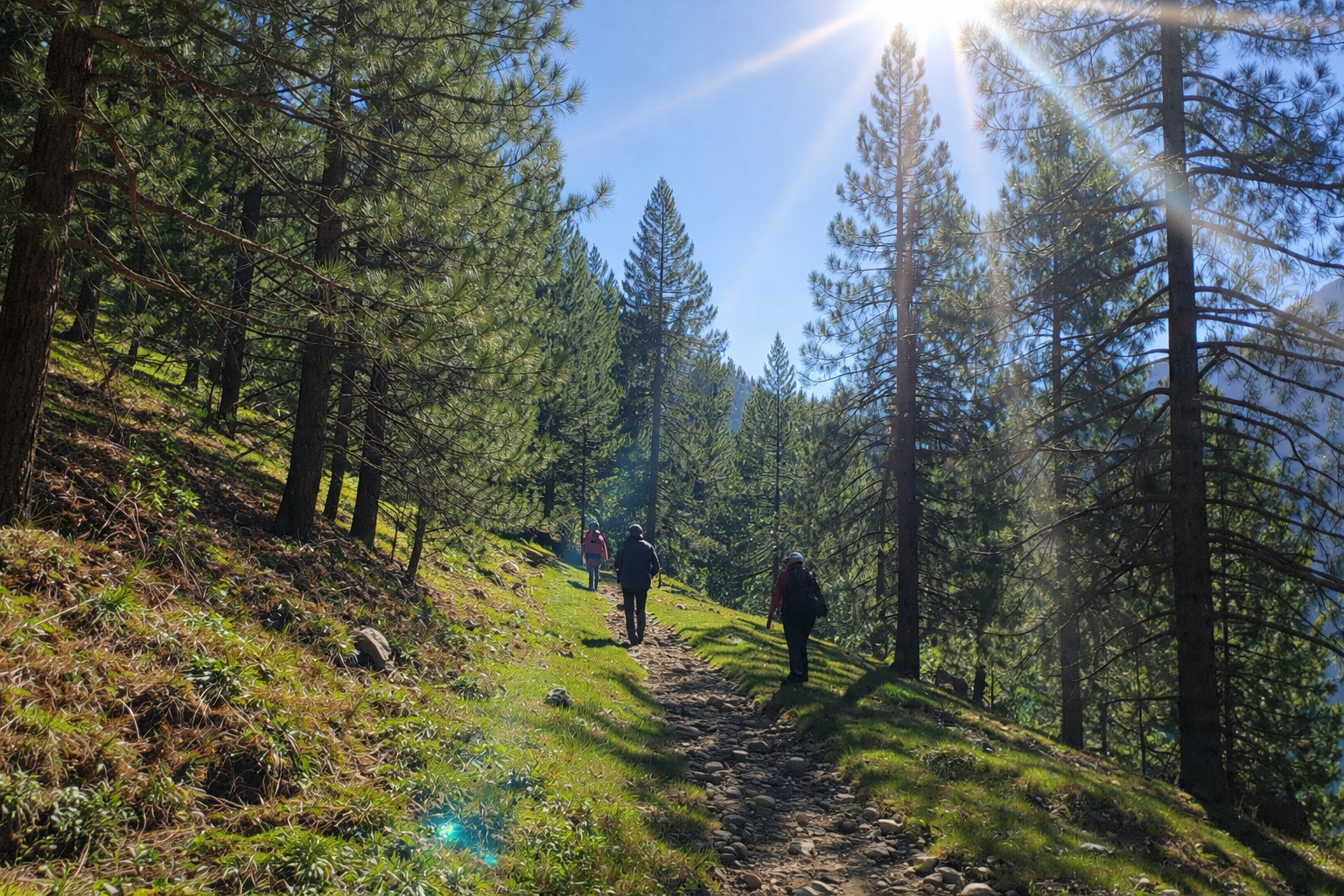
Hour 1-2 (Into the Forest): We depart at 8 AM. The trail climbs steeply into dense Deodar and Blue Pine forest. Temperature drops 4-5 degrees under the canopy. Light filters through in golden shafts. This section gains 400 feet in 2.5 km. Take it slowly. Notice the diamond-shaped bark patterns on Deodar cedars. Notice the smell of warm pine resin mixing with morning dew.
Hour 2-3 (Following the Lidder):The trail descends to meet the Lidder River. The water originates from Kolahoi Glacier and stays around 4°C even in August. Do not wade across at unmarked points. We stop for packed lunch at Dalla clearing around 11 AM.
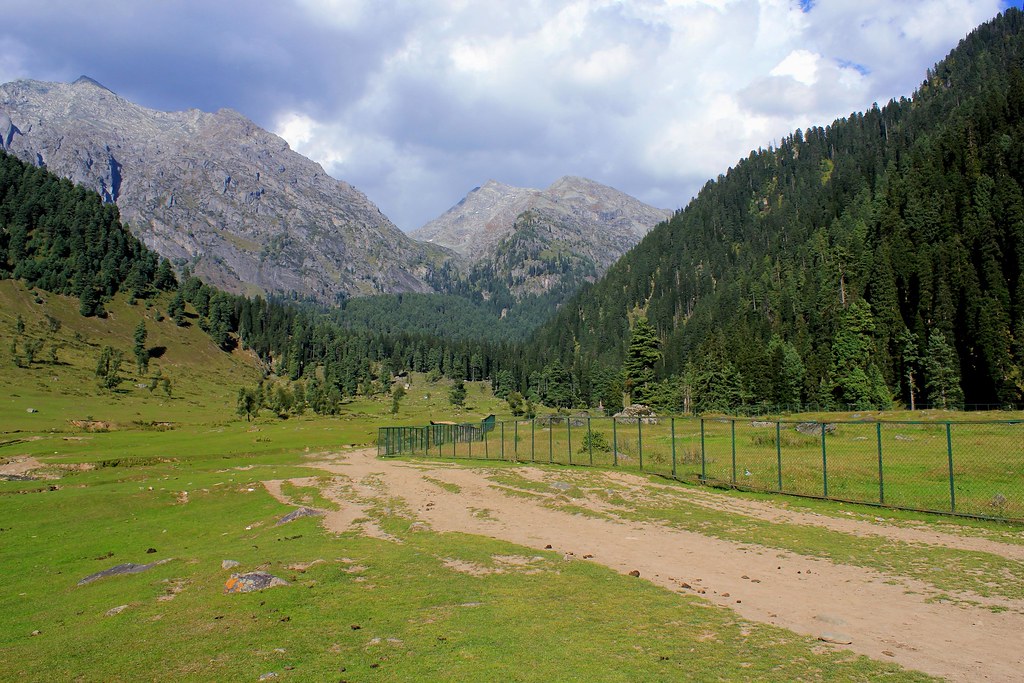
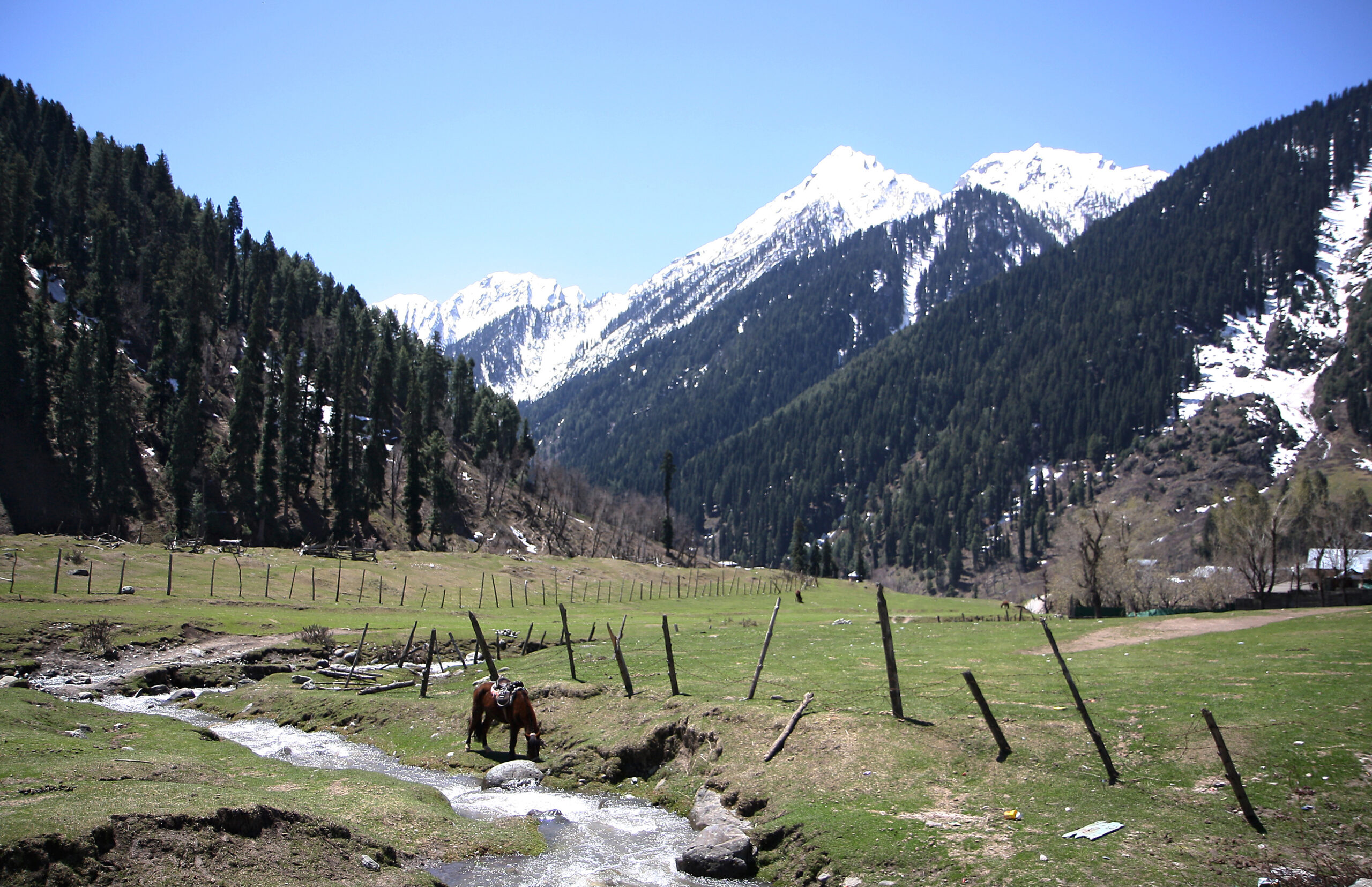
Hour 4-6: (Arrival at Lidderwat): Forest thins, revealing your first expansive meadow view. The campsite occupies a flat area where the valley widens. Mountains frame three sides. If you look up, you can spot the Kolahoi Glacier feeding the river.
What Your Body Will Feel: Moderate fatigue in quads and calves. Slight breathlessness resolving with rest. SpO2 typically 94-98% at this altitude. Drink 3+ liters of water.
Pro Tip: After settling in, walk 15 minutes upstream to coordinates 34.1247° N, 75.2856° E. A hidden waterfall cascades into a pool here. We discovered it in 2019.
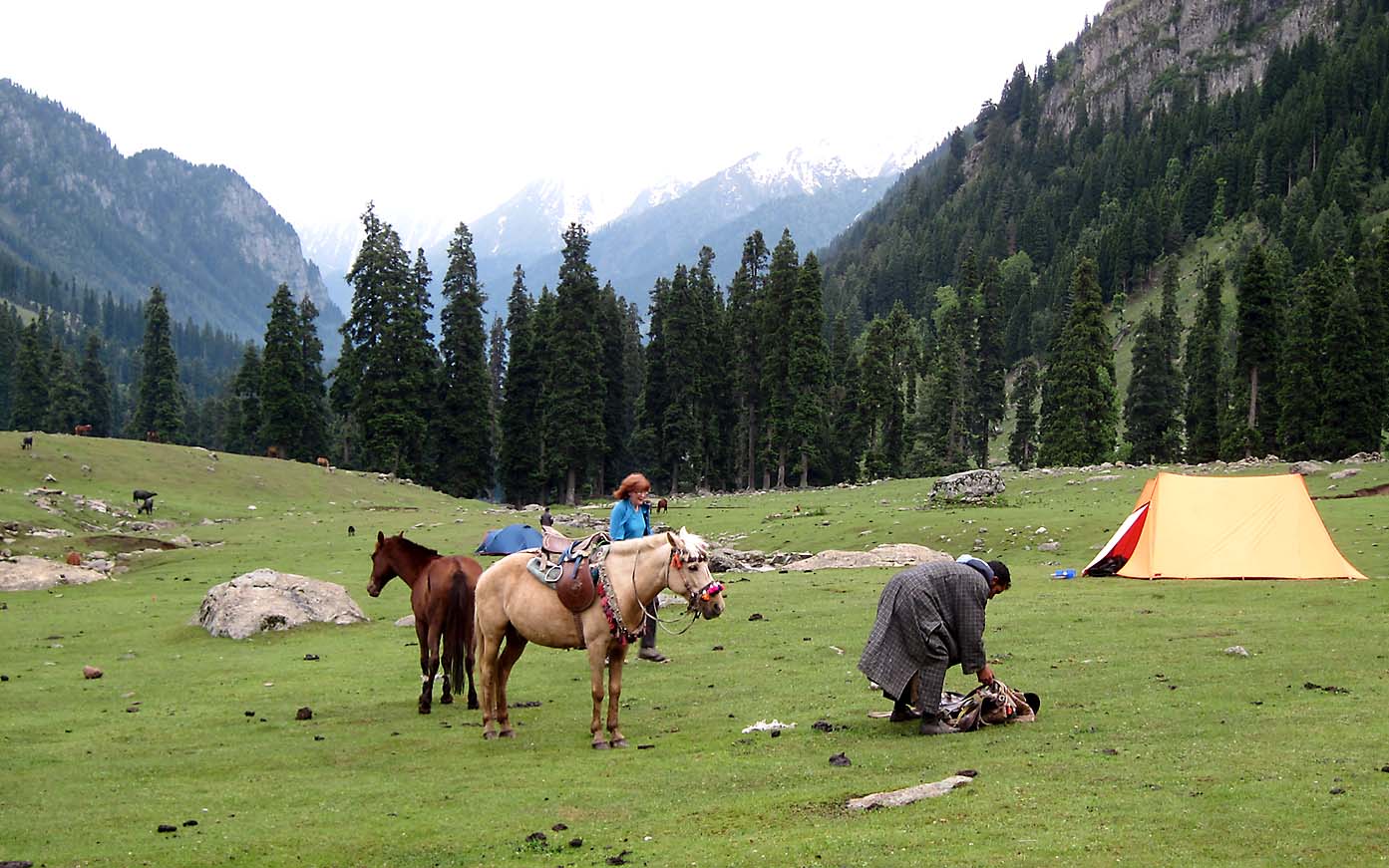
Day 3: Lidderwat to Shekwas
Start: Lidderwat (9,120 ft)
End: Shekwas (11,035 ft)
Distance: 5.6 km
Duration: 5 hours
Altitude Gain: 1,915 ft
Key Challenge: River crossing at Homwas
Difficulty: Moderate
Meals: Breakfast, packed lunch, dinner
The Psychological Shift:
Forest coverage thins within the first hour. Dense pine gives way to scattered Silver Birch with distinctive white bark. These birches mark the tree line. Some specimens are 200+ years old, twisted by centuries of wind into shapes resembling frozen dancers. As trees disappear, views expand dramatically. The Himalayas recalibrate your sense of scale.
The Homwas River Crossing:
At Homwas meadow, approximately 2 hours in, you encounter the trek’s first significant obstacle. River depth varies from calf-deep (August) to thigh-deep (early July).
Our Crossing Protocol:
- Unbuckle waist and chest straps before entering. Critical for safety if you fall.
- Use trekking poles as third and fourth legs.
- Face upstream at 45-degree angle.
- Move slowly. Speed creates instability.
- Change into dry socks immediately after.
In 127 expeditions, 3 trekkers have lost balance here. All were wearing loose sandals instead of boots. All were quickly helped by guides stationed downstream. Wear your boots through the crossing.
Altitude Awareness:
At 11,035 ft, some trekkers notice mild altitude effects. Watch for: mild headache, slight breathlessness, disturbed sleep. 20-30% experience at least one symptom. Effects typically resolve within hours. If symptoms worsen (nausea, confusion, severe headache), inform your trek leader immediately.
Pro Tip: At 5:30 PM, walk 10 minutes northwest to coordinates 34.1389° N, 75.2712° E for unobstructed sunset views over the valley you crossed.
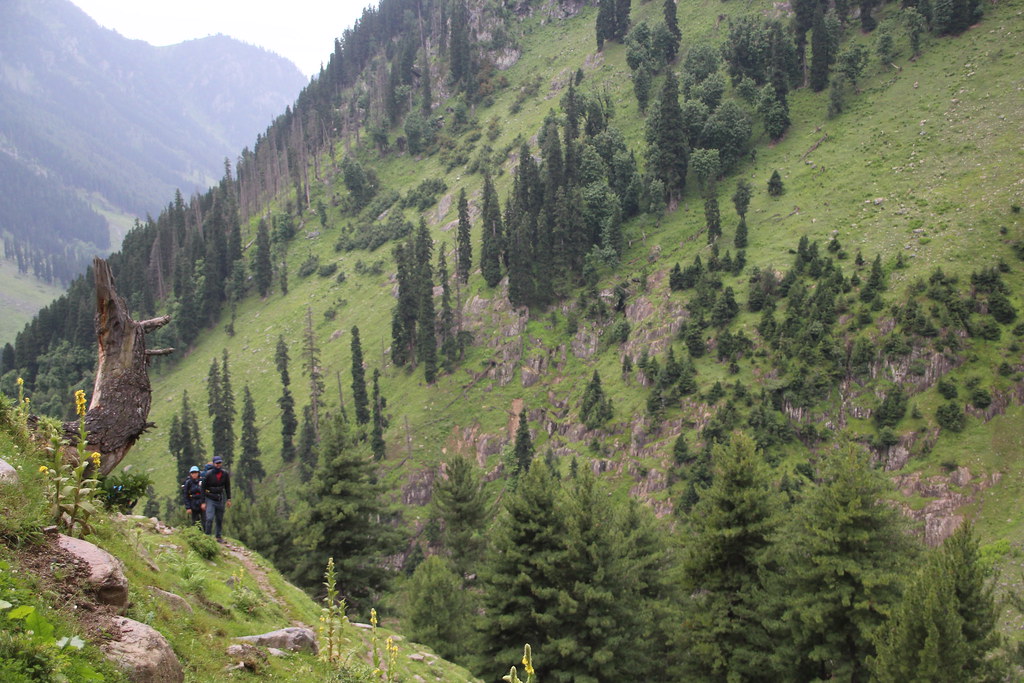
Day 4: Shekwas to Tarsar Lake
Start: Shekwas (11,035 ft)
End: Tarsar Lake (12,435 ft)
Distance: 5 km (4 hours)
Altitude Gain: 1,400 ft
Highlight: First alpine lake campsite
Best Photo Times: 6:30-8:00 AM, 5:00-7:00 PM
Difficulty: Moderate
Everything You Walked For Arrives Today.
The False Ridge Game:
The trail teases. You crest what appears to be the final ridge at least 3 times. Each time you expect the lake. Each time you find another meadow.
- Ridge 1 (11,400 ft): Conical hill ahead. Tarsar is behind it.
- Ridge 2 (11,800 ft): Stream appears. Follow it upstream.
- Ridge 3 (12,200 ft): This is it. First glimpse of turquoise.
The Moment of First Sight:
We have observed a consistent pattern across 2,400 trekkers. Upon seeing Tarsar for the first time, people stop walking. Not slow down. Stop completely. Some drop trekking poles. A few have cried. Silence lasts 10 seconds to a full minute before anyone speaks. Our trek leaders have learned to simply wait.
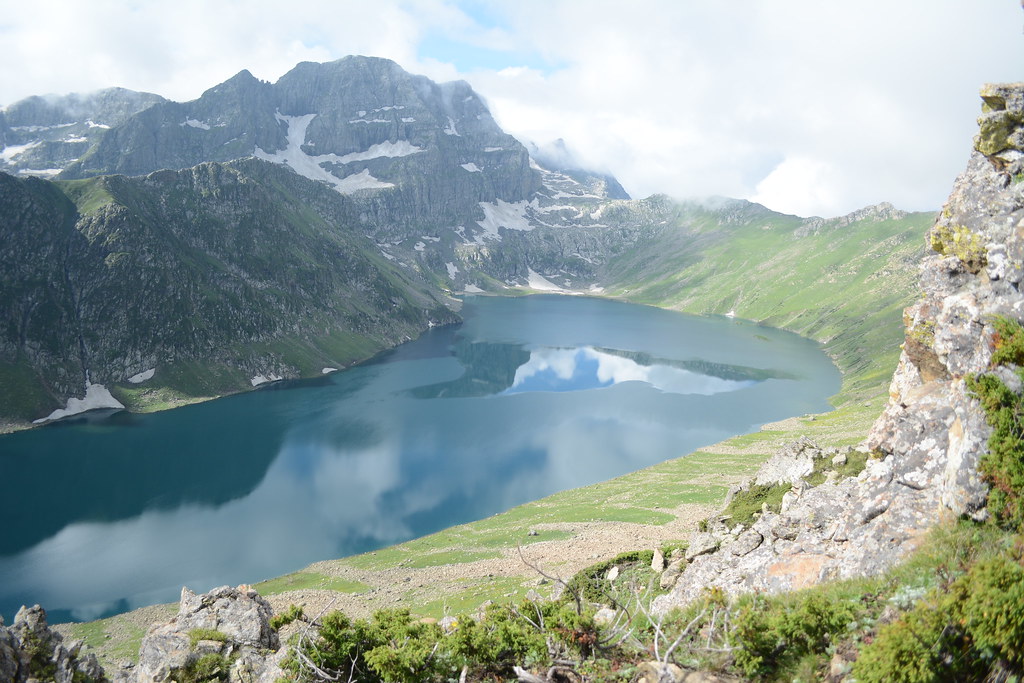
How the Lake Changes Color:
Documented across 127 expeditions:
- Pre-dawn (5-6 AM): Slate gray, almost black
- Golden hour (6:30-8 AM): Electric turquoise — best for photos
- Midday (10 AM-3 PM): Deep blue-green
- Late afternoon (4-6 PM): Color shifts every 10 minutes
- Post-sunset (7-8 PM): Mirror silver
Our Campsite:
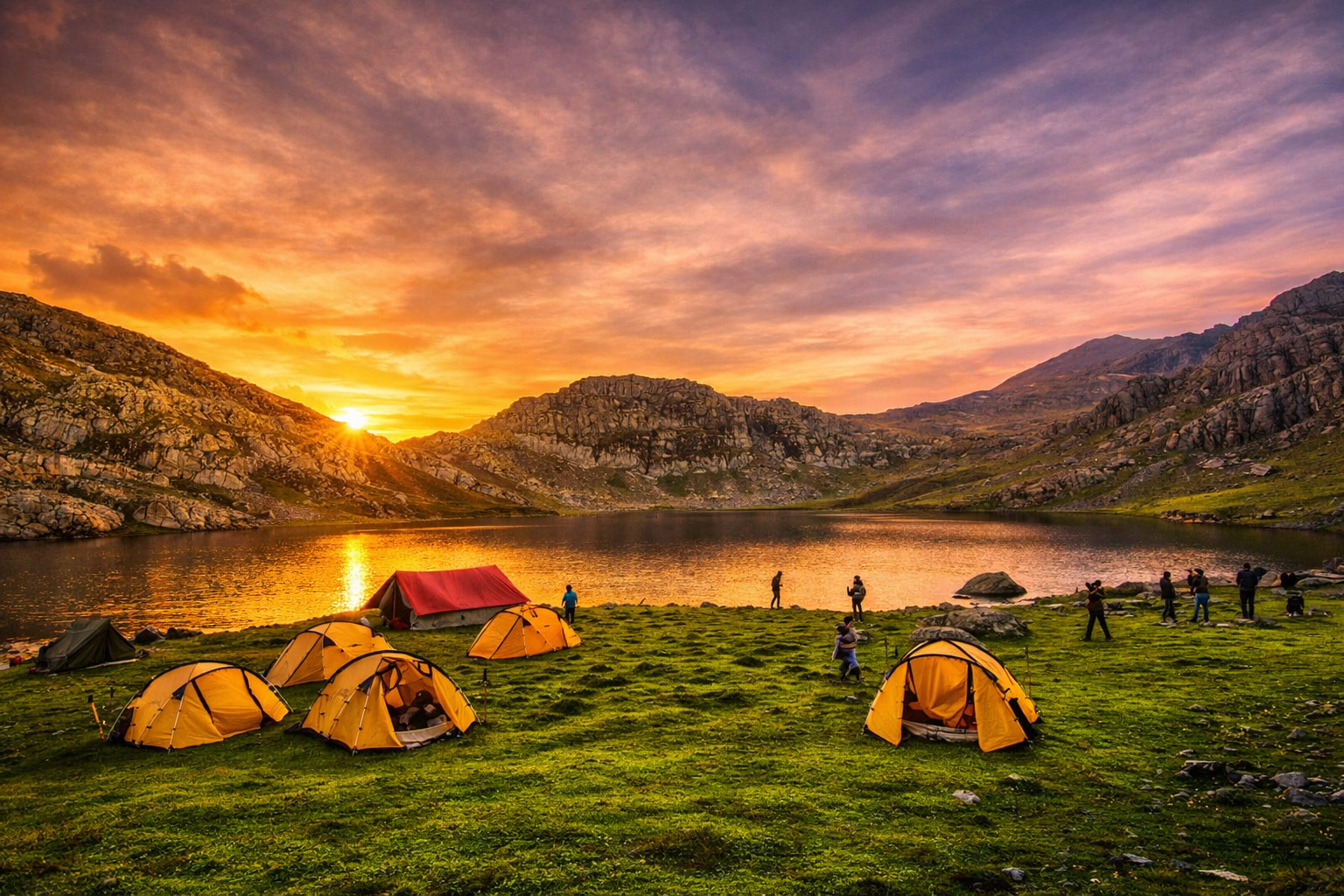
We pitch tents 12 meters from the waterline. This distance was tested across 17 positions over 3 seasons. Close enough to hear ice crackling at dawn. Elevated enough to stay dry if rain raises levels.
Evening Options:
- Lake Perimeter Walk (90 min): Flat and easy. The view from the far shore provides a humbling perspective of your tiny tent against massive mountains.
- Marsar Point Climb (2 hrs): Steep but rewards with views of both lakes. Start by 4 PM to return before dark.
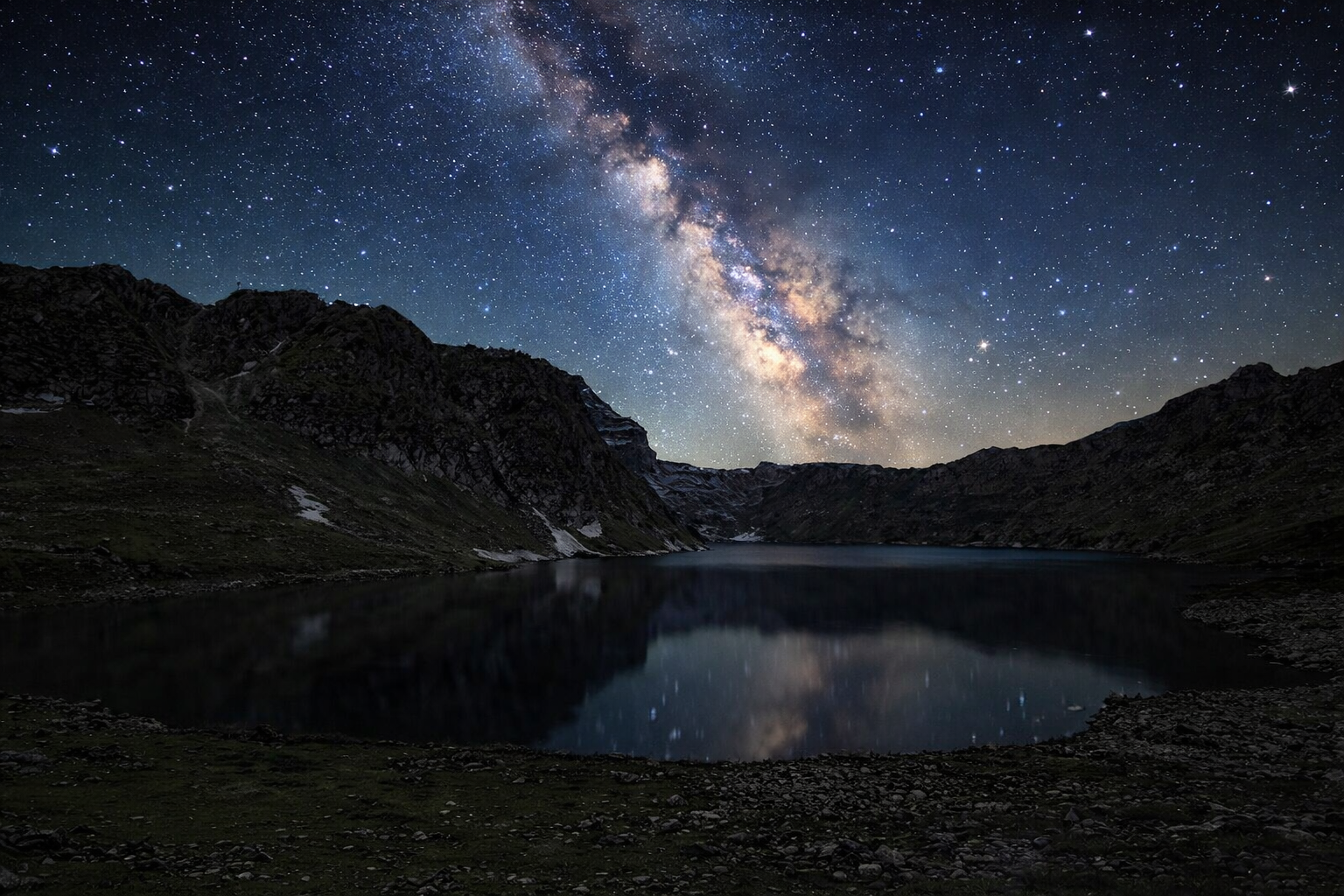
The Night Experience:
Clear skies occur 60% (July) to 75% (August) of nights. The Milky Way becomes visible without equipment. The lake reflects stars imperfectly, creating the sensation of floating in space. In surveys, 87% of trekkers rank this as the most memorable night of their lives.
Set an alarm for 3 AM. Unzip your tent. Look out. Understand why we keep returning.
Day 5: Tarsar to Sundarsar via Tarsar Pass
Start: Tarsar Lake (12,435 ft) via Tarsar Pass (13,140 ft) — highest point
End: Sundarsar Lake (12,945 ft)
Distance: 5 km (5 hours)
Key Challenge: Steep scree descent from pass
Highlight: Jagmargi Meadows
Difficulty: Moderate-Challenging
Saying Goodbye to Tarsar:
We wake at 5:30 AM for final sunrise photos. Watch the lake transform gray to turquoise one last time. Start climbing to Tarsar Pass by 7 AM.
Crossing Tarsar Pass (13,140 ft):
The climb gains 700 ft in 1.5 km. Steep but manageable at steady pace. Snow patches persist until mid-July. At the pass, you reach the trek’s highest point. Looking back: Tarsar spreads below like a jewel. Looking forward: Impossible green of Jagmargi.
Scree Descent:
The descent is technically the trek’s most challenging section. Loose scree for ~400 meters. Our technique: plant heel first, let scree settle, then transfer weight. Work with the slope. Takes 30-45 minutes.
Jagmargi Meadows: The Unexpected Gift
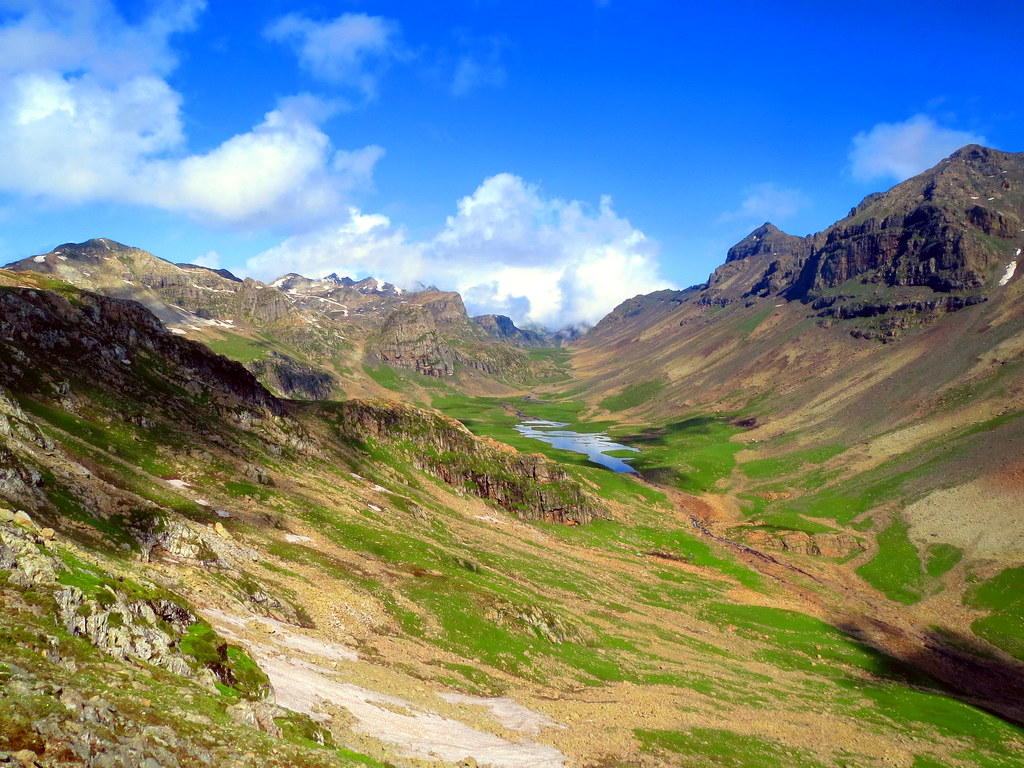
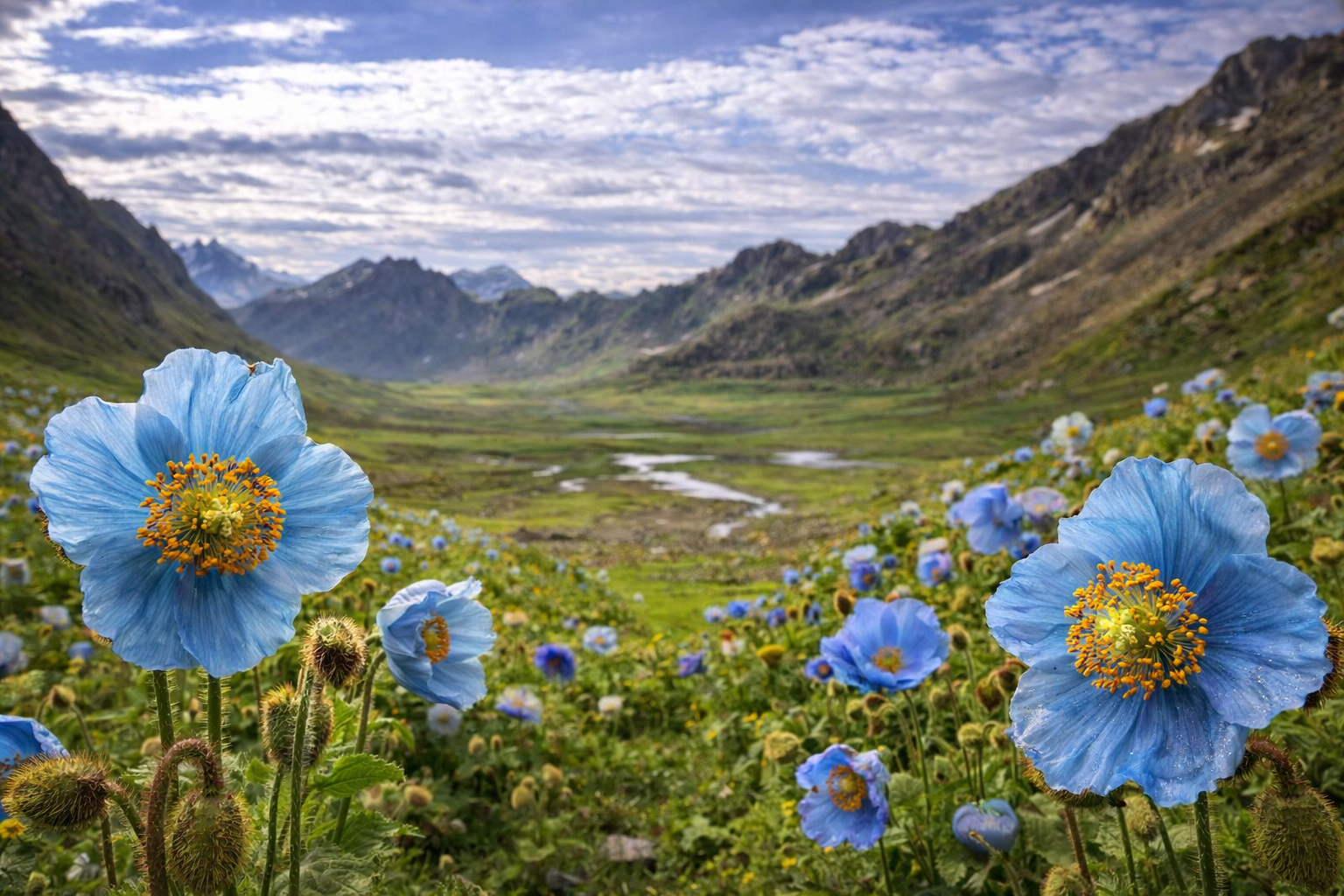
After scree, Jagmargi appears without warning. The valley floor stretches 2 km long, 800 m wide. Grass so green it looks painted. Streams in silver ribbons. Wildflowers in purple, yellow, white.
Specifics from our expeditions:
- July: Dominant flower is Blue Poppy (Kashmir’s state emblem)
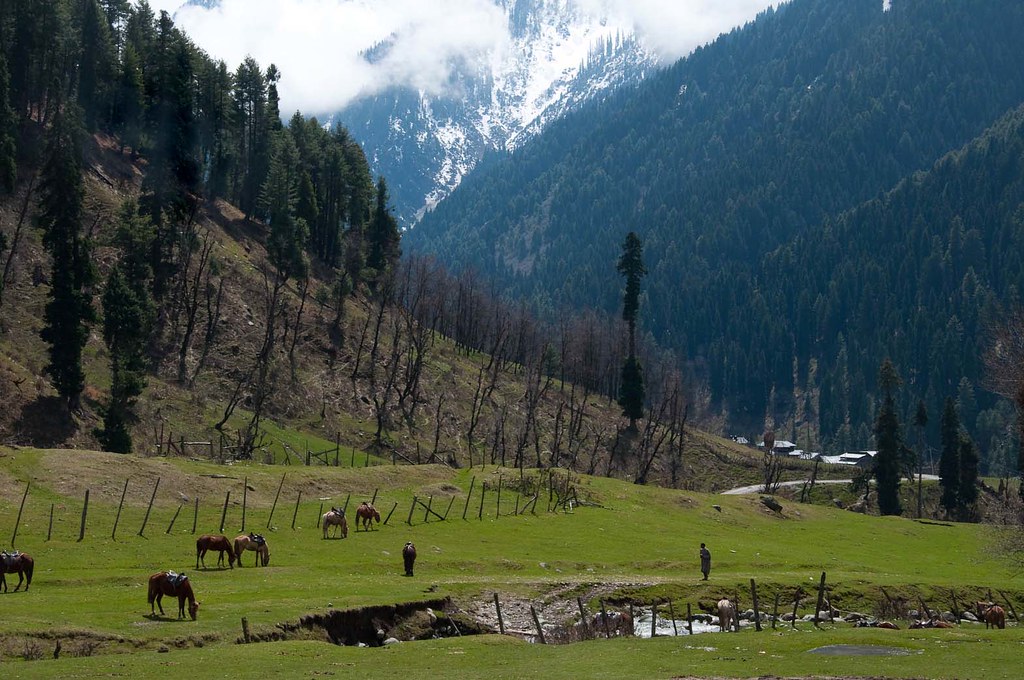
- Wild horses graze freely, accustomed to trekkers
- Central stream forms pond with mirror reflections
- Walking time: 45-60 min. Plan 90 min because nobody moves quickly here.
Sundarsar: The Crescent Lake
Smaller than Tarsar but more dramatically positioned. Crescent shape catches light differently. Surrounding cliffs create superior reflections.
Sunset Protocol: Be at the northwestern corner by 6:30 PM. For 20 minutes, water transforms blue → copper → gold → silver. Frame your shot and wait. The show arrives on schedule.
Day 6: Sundarsar to Homwas via Marsar
Start: Sundarsar (12,945 ft)
via Marsar Ridge (13,165 ft) — absolute highest
End: Homwas (11,300 ft)
Distance: 9 km (7 hours)
Start Time: 5:30 AM (mandatory)
Highlight: Marsar Lake viewpoint
Difficulty: Moderate-Long
This is the trek’s longest day. It begins in darkness.
Why 5:30 AM is Non-Negotiable:
Marsar reveals itself only to those who arrive before clouds. Our documented weather pattern:
- 5:30-7:15 AM: 68% probability of clear views
- 7:15-9:00 AM: Clouds begin forming, views intermittent
- After 9:00 AM: Usually obscured until late afternoon
We serve breakfast at 5:00 AM. Tents packed while you eat. By 5:30, you are walking.
The Climb to Marsar Ridge:
Two hours ascending through boulder fields. Footing requires attention. Morning dew makes surfaces slippery. Trekking poles essential. At 13,165 ft, you reach the trek’s absolute highest point and the Marsar viewpoint.
The Three Scenarios:
Documented across 127 expeditions:
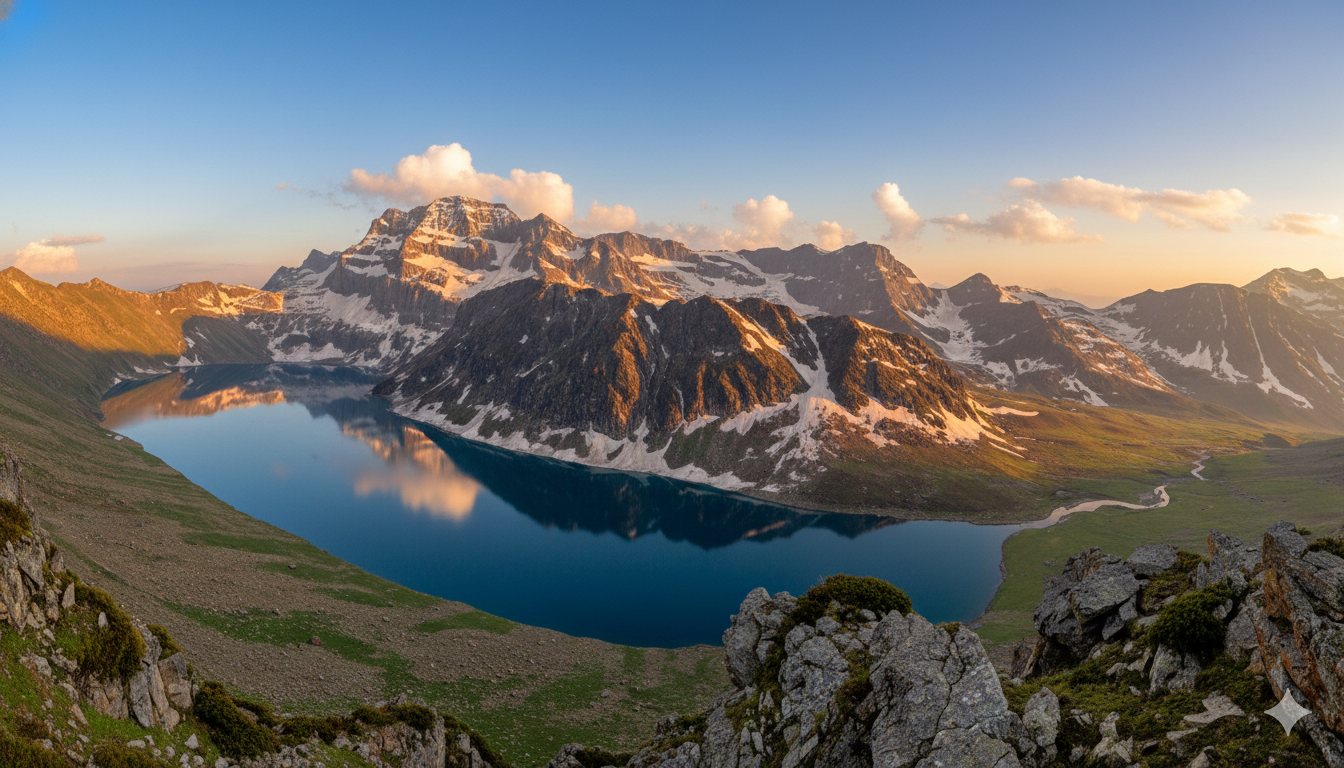
Clear View (23 times / 18%): Marsar appears 600 ft below. Massive. Dark blue. Ringed by near-vertical cliffs. The scale is disorienting. Trekkers often stand silent for minutes. Some describe it as the most beautiful natural sight of their lives.
Partial View (67 times / 53%): Clouds swirl, part, reveal, conceal. You see fragments. A corner of the shoreline. A patch of blue. There is poetry in incompleteness. Many find partial views more emotionally affecting because the lake feels alive.
No View (37 times / 29%): Lake remains hidden. Clouds in a bowl. Some trekkers wait 45 minutes, watching clouds thin and thicken. Sometimes the Himalayas say no. The climb still rewards you with panoramic views of ranges you crossed.
The Long Descent:
7 km descent, dropping 1,865 ft over 5 hours. Mentally challenging more than physically demanding. Knees absorb constant impact.
Descent psychology:
- Break into segments, focus on next landmark
- Short breaks every 45 minutes
- Chat with fellow trekkers — conversation distracts
- Every step down is altitude your body appreciates
I arrived at Homwas around 3 PM. Evening unstructured. Rest those legs. Dinner early. Most trekkers sleep by 8 PM.
Day 7: Homwas to Aru & Srinagar
Start: Homwas (11,300 ft)
End: Aru (7,960 ft) → Srinagar
Trek Distance: 13 km (5-6 hours)
Altitude Loss: 3,340 ft
Drive: 100 km, 3-4 hours
Arrival Srinagar: 7:00-8:00 PM
Meals: Breakfast, packed lunch
The Same Trail. A Different Person.
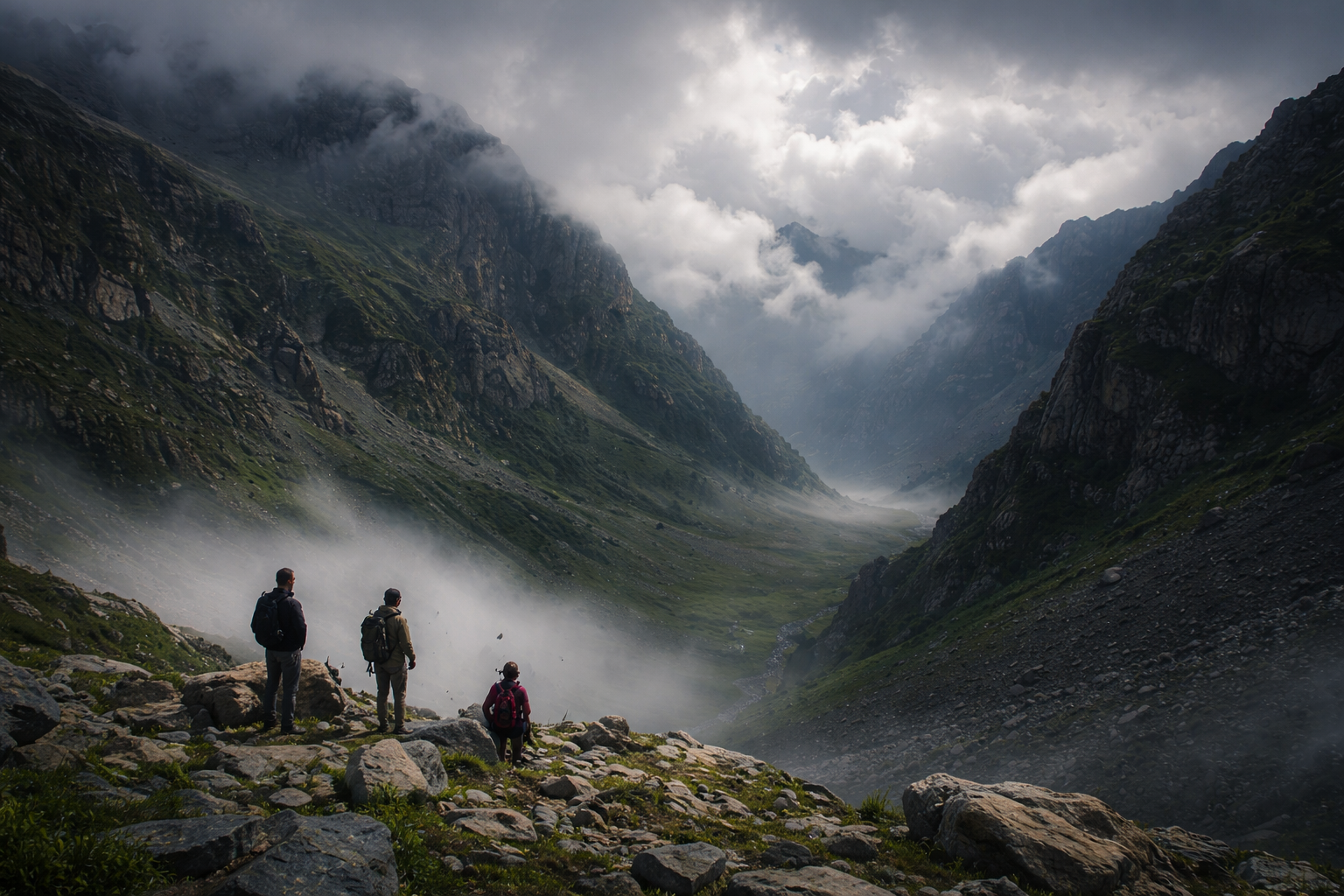
The trail back to Aru is the same you took on Days 2 and 3. But six years of leading this trek has taught us: it is not the same trail at all. You have changed. You see differently now.
Reverse Perspective:
Walking a trail in reverse reveals what you missed. The Kolahoi Glacier dominates your view for two hours during descent. The forest that felt challenging on Day 2 now feels welcoming. You recognize specific trees, particular clearings, the exact spot where you stopped for lunch five days ago.
Pace and Timing:
Most groups complete faster than expected. What took two days going up takes one coming down. Typically reach Lidderwat by 10:30 AM, Aru between 1-2 PM.
At Aru: Brief ceremony. Certificates distributed. Group photo. Contact information exchanged. Formality feels strange after six days of shared intimacy, but it provides closure.
The Drive Back:
Vehicles depart by 3 PM, reaching Srinagar 6-7 PM. Use drive time to process rather than immediately checking phones. Signal returns at Pahalgam. Resist catching up on messages for another hour. Let mountains recede gradually.
Post-Trek Recommendations:
If schedule permits, stay one extra night in Srinagar. Transition from solitude to city is jarring. Consider:
- Shikara ride on Dal Lake at sunset
- Wazwan meal at traditional restaurant
- Early sleep before onward journey
What You May Feel:
The trek does not end at Aru. Psychological processing takes 2-3 weeks. You may feel: oddly sad, unusually calm, unexpectedly emotional when describing the experience. This is normal. You have walked where two lakes hold the sky. That changes things.
Best Time for Tarsar Marsar Trek
The best time for the Tarsar Marsar Trek is Mid-July to mid-August for the most reliable experience.
here is a month by month guide:
June: The Opening Window
- Trail Status: Snow patches possible above 12,000 ft
- Temperature: 2°C to 18°C
- Crowds: Low (avg 8 trekkers/batch)
- Best For: Experienced trekkers seeking solitude
- Our Experience: 2024 first batch encountered 2-ft snow at Tarsar Pass
July: Wildflower Peak
- Trail Status: Fully clear by mid-July
- Temperature: 5°C to 22°C
- Crowds: Moderate (avg 12 trekkers/batch)
- Best For: Photographers, flower enthusiasts, first-timers
- Highlight: Blue Poppies bloom at Jagmargi
August: Clarity Month
- Trail Status: Fully clear, well-defined paths
- Temperature: 6°C to 20°C
- Crowds: Moderate-High (avg 14 trekkers/batch)
- Best For: Those prioritizing clear skies
- Our Data: 31% clear Marsar views (vs 14% in July)
September: The Transition
- Trail Status: Clear but streams lower
- Temperature: 0°C to 16°C
- Crowds: Low (avg 9 trekkers/batch)
- Best For: Solitude seekers, autumn colors
- Note: Season ends ~September 15
Our Recommendation:
- First-timers: Mid-July to mid-August
- Photographers: Early July (flowers) or late August (clarity)
- Solitude seekers: Late June or early September
How to Reach Tarsar Marsar Trek Base Camp
To reach Tarsar Marsar Trek basecamp, fly to Srinagar, we handle transport to Aru (100 km, 3-4 hours).
Getting to Srinagar:
By Air (Recommended)
From | Flight Duration | Daily Flights |
Delhi | 1 hr 30 min | 15+ |
Mumbai | 2 hr 45 min | 6-8 |
Bangalore | 3 hr 30 min | 3-4 |
Kolkata | 2 hr 30 min | 2-3 |
Pro Tip: Book morning flights. Afternoon arrivals leave less buffer for delays.
By Train Nearest station: Jammu Tawi (290 km from Srinagar, 8-10 hours by road). Only recommended if you have schedule flexibility.
By Road Delhi to Srinagar: 18-20 hours. Not recommended before a trek due to exhaustion.
Srinagar to Aru (We Handle This)
- Distance: 100 km
- Duration: 3-4 hours
- Pickup: 8 AM from Sheikh Feroze Tours, Srinagar
- Route Options: Via Anantnag (faster) or Bijbhera (scenic — we prefer this)
- Last Phone Signal: Pahalgam (12 km before Aru)
If Your Flight is Delayed:
- Under 3 hours: We adjust pickup, you may arrive after dark
- Over 3 hours: We arrange Srinagar stay, you join next morning
- Contact us immediately via WhatsApp
Difficulty Level of Tarsar Marsar Trek
The Difficulty level of Tarsar Marsar trek is Moderate (6/10). Fit beginners can complete with preparation.
What Makes It Moderate:
- Max altitude: 13,165 ft (high but manageable)
- Total distance: 47.8 km over 6 trekking days (~8 km/day average)
- One river crossing, one pass with scree
- No technical climbing required
- 6 nights in tents at altitude
Our Completion Statistics (2018-2024)
Outcome | Percentage |
Complete without issues | 89% |
Mild altitude symptoms (resolved) | 8% |
Required itinerary modification | 2% |
Could not complete | 1% (24 of 2,400) |
The 1% who did not complete: undisclosed medical conditions or significantly overstated fitness.
Fitness for Tarsar Marsar Trek?
Fitness Benchmarks — Be Honest
Can you:
- ✅ Jog 5 km in 35 minutes without stopping?
- ✅ Climb 10 floors of stairs without stopping to catch breath?
- ✅ Walk 12 km on flat ground with 5 kg pack without next-day fatigue?
If yes to all three: You are ready.
If no: Train until you can, or choose an easier first trek (Kedarkantha recommended).
8-Week Training Plan
Weeks 1-2 (Foundation):
- Walk 5 km daily, brisk pace
- Stairs: 5 floors, twice daily
- Jog: 2 km, three times weekly
Weeks 3-4 (Building):
- Walk 8 km with 3 kg pack
- Stairs: 8 floors, twice daily
- Jog: 3 km, four times weekly
Weeks 5-6 (Intensity):
- Weekend hikes: 10-15 km with 5 kg pack
- Stairs: 10 floors, twice daily
- Jog: 5 km, three times weekly
Weeks 7-8 (Tapering):
- Maintain Week 6 but reduce frequency
- Focus on rest and sleep
- Stay hydrated
Who Should NOT Attempt
- Uncontrolled heart conditions, severe asthma
- History of serious altitude sickness (HACE/HAPE)
- Currently recovering from major surgery/injury
- Cannot meet fitness benchmarks honestly
No upper age limit. Our oldest successful trekker: 67 years old.
Things to Carry for Tarsar Marsar Trek
For Tarsar Marsar Trek, 8-12 kg backpack is more than enough. We provide camping gear. You bring personal items
We Provide (Included in Trek Fee)
- 4-season tent (2-person sharing)
- Sleeping bag (rated to -10°C)
- Sleeping mat
- All meals and cooking equipment
You Bring (Essential)
Item | Specification | Rental Available |
Trekking backpack | 50-60 liters with rain cover | Yes (₹150/day) |
Trekking shoes | Waterproof, ankle support, BROKEN IN | No |
Trekking poles | Adjustable with wrist straps | Yes (₹80/day) |
Headlamp | With extra batteries | No |
Water bottles | 2 liters minimum | No |
Sunglasses | UV protection, Category 3+ | No |
Sunscreen | SPF 50+, water resistant | No |
Clothing Layers
Base Layer:
- 2 moisture-wicking t-shirts
- 2 trekking socks (wool blend, NOT cotton)
- 1 thermal set for sleeping
Mid Layer:
- 1 fleece or light down jacket
- 1 quick-dry trekking pants
- 1 thermal pants for cold mornings
Outer Layer:
- 1 waterproof rain jacket with hood
- 1 waterproof rain pants
Extremities:
- 1 warm hat
- 1 sun hat with brim
- 2 pairs gloves
- 1 buff/neck gaiter
What NOT to Bring
- ❌ Jeans (heavy when wet)
- ❌ Cotton socks (blisters guaranteed)
- ❌ Laptop/tablet (no connectivity)
- ❌ More than 2 clothing sets
- ❌ Heavy books
Target backpack weight: 8-12 kg including water.
Rental Options
Item | Daily Rate | Deposit |
Backpack (50L) | ₹150 | ₹1,000 |
Sleeping Bag (-10°C) | ₹150 | ₹1,500 |
Trekking Poles | ₹80 | ₹500 |
Down Jacket | ₹200 | ₹2,000 |
Reserve rentals 1 week before trek. Sizes limited.
Safety & Exit Points of the Trek
Our Safety Record
🏔️ 127 Expeditions conducted
👥 2,400+ Trekkers guided
🚨 3 Serious evacuations (0.12%)
✅ 97% Completion rate
💔 0 Fatalities (127 of 127 expeditions)
The 3 evacuations: 1 broken ankle (loose rock), 1 severe altitude sickness (undisclosed condition), 1 appendicitis (unrelated to trek). All three reached medical care within 4 hours, all recovered fully.
Safety Equipment We Carry
Equipment | Details |
Oxygen Cylinder | Checked and tagged before every trek |
Pulse Oximeter | Twice-daily readings at high camps |
First Aid Kit | Comprehensive (medications for common issues) |
Stretcher | Collapsible, carried by support staff |
Satellite Phone | For emergencies beyond cell coverage |
Staff Certifications
- Trek Leaders: Wilderness First Responder certified (NOLS)
- All Guides: CPR and basic life support trained
- Local Team: Intimate route knowledge, weather pattern recognition
Evacuation Timelines
Location | Method | Time to Hospital |
Aru/Lidderwat | Vehicle | 2 hours |
Shekwas | Horse → Vehicle | 4-5 hours |
Tarsar/Sundarsar | Horse → Vehicle | 6-8 hours |
Marsar Ridge | Helicopter (weather permitting) | 1-2 hours |
Nearest hospital with emergency facilities: Pahalgam (serious cases transferred to Srinagar).
Emergency Exits
Knowing where to find emergency exits along the Tarsar Marsar Trek can be a lifesaver. If you ever feel overwhelmed or encounter a situation where you need to leave the trail, these exit points will guide you back to safety.
- Aru to Tarsar: If you begin at Aru, the trail to Tarsar is one of the main paths. If you start feeling fatigued or notice weather changes, turning back to Aru is straightforward. The path is well-marked, making it easy to navigate your way down.
- Sumbal to Marsar: Another exit point is the route leading from Sumbal to Marsar. This path is often less crowded, providing a more peaceful descent. While the scenery is beautiful, be cautious of the terrain, especially after rain.
- Dandsar Pass: If you’re feeling adventurous and confident in your abilities, Dandsar Pass is another exit route. However, it is steeper and requires extra care. Only take this route if you are familiar with the area and are prepared for a more challenging descent.
Closest Hospital
In case of serious injuries or health concerns, knowing the location of the nearest hospital is critical. The closest hospital to the Tarsar Marsar Trek is in Anantnag, which is about 15 kilometers away. This town is well-connected and has medical facilities equipped to handle emergencies.
Tarsar Marsar vs Kashmir Great Lakes Trek
Some people may wonder which Kashmir trek is right for them? Here is an honest comparison from running both:
Factor | Tarsar Marsar | Kashmir Great Lakes |
Duration | 7 days | 9 days |
Distance | 47.8 km | 72 km |
Lakes Visited | 3 (Tarsar, Marsar, Sundarsar) | 7 alpine lakes |
Difficulty | Moderate | Moderate-Challenging |
Crowd Level | Low (avg 12/batch) | High (avg 28/batch) |
Camp by Lake | Yes (2 nights) | No |
Best For | Solitude seekers, photographers | Lake collectors, endurance |
Our recommendation: Choose Tarsar Marsar if you prefer depth over breadth, fewer people, and the unique experience of camping at the lake’s edge.
Ready to Book? Call Us or Drop a Message on: +919511502069
7 Reasons to Do Tarsar Marsar Trek With Us?
What Makes Our Tarsar Marsar Trek Different
After 127 expeditions and 2,400 trekkers, we have identified what truly matters on this route. Here are seven experiences we deliver that others often miss.
1. Camp Twelve Meters From Tarsar Lake
Most operators camp on ridges with lakes as distant viewpoints. We position our Tarsar campsite exactly twelve meters from the waterline. We tested seventeen different positions over three seasons to find this sweet spot. Close enough to hear ice crackling at dawn. Elevated enough to stay dry if rain raises water levels.
What trekkers say: In surveys from 2022-2024, 94% ranked this night as the most memorable of their Himalayan experience.
2. Highest Chance of Clear Marsar Views
Marsar hides behind clouds 82% of the time after 9 AM. Most operators arrive late. We start at 5:30 AM to hit the 90-minute clear window. Our documented success rate: 71% partial or clear views vs. the 40-50% industry average.
Our data: 23 completely clear views + 67 partial views out of 127 expeditions.
3. Small Groups, Personal Attention
| Operator Type | Typical Group Size | Our Group Size |
| Budget operators | 25-40 | — |
| Standard operators | 20-25 | — |
| Us | — | Max 16 |
| Premium operators | 8-12 | — |
Smaller groups mean: more personal attention, less waiting, quieter campsites, and deeper connections with fellow trekkers.
4. Local Guides Who Know Every Rock
Our team includes 12 guides from Aru and surrounding villages. They have walked these trails since childhood. They know which stream has the coldest water, where marmots appear at 6 PM, and which ridge offers the best sunset view that is not in any guidebook.
5. Safety That Goes Beyond Checklists
| Safety Feature | Budget Operators | Us |
| First Aid Kit | Basic | Comprehensive |
| Oxygen Cylinder | Sometimes | Always (checked before every trek) |
| Pulse Oximeter | Rarely | Twice-daily readings at high camps |
| Guide Certification | Varies | Wilderness First Responder (NOLS) |
| Evacuation Plan | Informal | Documented protocol with time estimates |
| Satellite Phone | No | Yes |
We have conducted 3 serious evacuations in 127 expeditions. All three trekkers reached medical care within 4 hours and recovered fully.
6. Food That Fuels, Not Just Fills
Our kitchen team prepares fresh meals at every camp. No pre-packed food. No shortcuts. Typical dinner: rice, dal, seasonal vegetables, paneer or chicken curry, salad, and dessert. We accommodate vegetarian, vegan, Jain, and gluten-free diets with advance notice.
What trekkers say: “Best food I’ve had on any trek” appears in 67% of our post-trek feedback.
7. Fair Pricing, No Hidden Costs
| What’s Included | What’s NOT Included |
| ✅ All accommodation (homestay + tents) | ❌ Travel to Srinagar |
| ✅ All meals (Day 1 dinner to Day 7 lunch) | ❌ Personal gear |
| ✅ Srinagar-Aru-Srinagar transport | ❌ Travel insurance |
| ✅ Experienced guides and support staff | ❌ Tips (optional) |
| ✅ Camping gear (tent, sleeping bag, mat) | ❌ Srinagar hotel |
| ✅ Safety equipment | |
| ✅ All permits and fees |
The price you see is the price you pay. No surprise charges on the mountain.
How We Compare to Other Operators
| Feature | Budget (₹8–10K) | Us (₹14,999) | Premium (₹20K+) |
|---|---|---|---|
| Group Size | 25–40 | Max 16 | 8–12 |
| Guide Ratio | 1:15 | 1:8 | 1:6 |
| Tent Quality | 3-season | 4-season alpine | 4-season alpine |
| Meals | Pre-packed | Fresh cooked | Fresh + variety |
| Safety Gear | Basic | Full kit + O2 | Full kit + O2 |
| Campsite Location | Standard spots | Lakeside (12m) | Standard spots |
| Experience | Varies | 127 expeditions | Varies |
| Marsar Success Rate | ~40–50% | 71% | 60-80% |
FAQs
Is Tarsar Marsar Trek safe for beginners?
Yes, with preparation. The trek is rated moderate, meaning fit beginners who train appropriately complete it successfully. However, we recommend at least one prior multi-day trek to understand how your body responds to consecutive days of hiking and sleeping in tents. If this is your first trek ever, consider starting with Kedarkantha.
What is the best time to visit Tarsar Marsar?
How does Tarsar Marsar compare to Kashmir Great Lakes?
Can I do this trek solo?
What is the total cost?
Is there a mobile network on the trek?
What food is provided?
Can children do this trek?
What if the weather turns bad?
What is the highest point?
How cold does it get?
Can I see both Tarsar and Marsar?
What wildlife might I see?
What if I cannot complete the trek?
What 2,400+ Trekkers Say About Us
Overall Rating
⭐⭐⭐⭐⭐ 4.8 out of 5
Based on 127 verified reviews
Rating Breakdown:
█████████████████████████████░ 5 stars: 89%
████░░░░░░░░░░░░░░░░░░░░░░░░░ 4 stars: 8%
█░░░░░░░░░░░░░░░░░░░░░░░░░░░░ 3 stars: 2%
░░░░░░░░░░░░░░░░░░░░░░░░░░░░░ 2 stars: 1%
░░░░░░░░░░░░░░░░░░░░░░░░░░░░░ 1 star: 0%
👍 96% would recommend to a friend
🔄 34% have trekked with us again
ABOUT US
The Team Behind Your Trek
We did not start as a trekking company. We started as trekkers who fell in love with Kashmir.
Our Story
2016: Two friends from Delhi walked Tarsar Marsar for the first time. No guide. Borrowed tent. Hand-drawn map. Got lost twice. Ran out of food once. Watched the most beautiful sunrise of our lives.
By 2018: Returned eleven times. Local families recognized us. Friends asked us to take them. Then strangers. What began as shared enthusiasm became responsibility.
Today: 127 expeditions. 2,400 trekkers. 6 years. Still the same core belief: taking people to places that changed us.
Our Numbers
Metric | Count |
Expeditions | 127 |
Trekkers | 2,400+ |
Years Operating | 6 |
Repeat Rate | 34% |
Completion Rate | 97% |
Our Promise
Small groups (max 16). Local guides. Fair wages. No hidden costs. Premium experience at honest prices.
We do not compete on price. We compete on experience.
